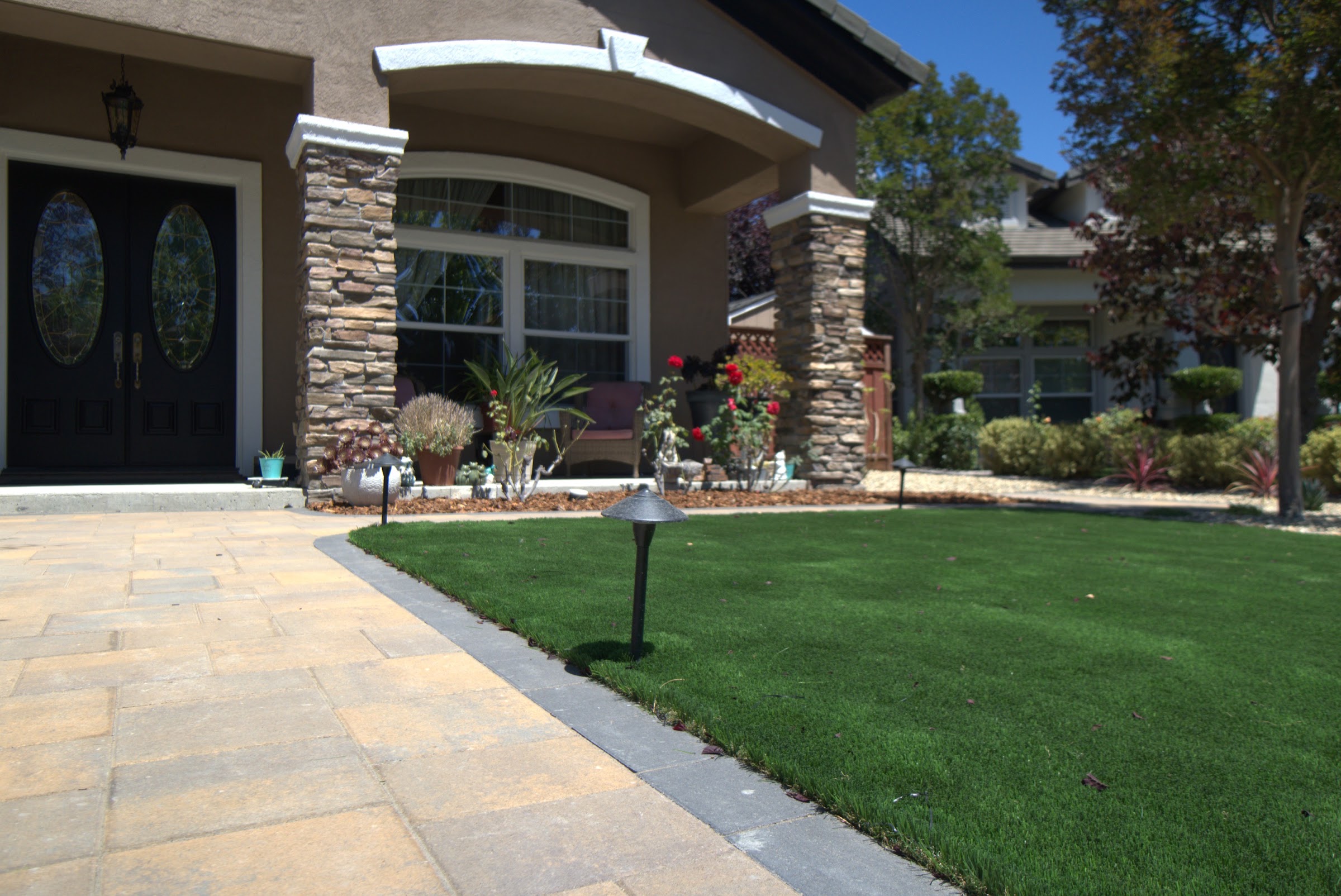
Torn between pavers and concrete? Here's the one fact that decides it for many of our clients: pavers are individual units locked together on a compacted base. When the ground under your patio moves, a paver surface moves with it instead of cracking.
That's why we recommend pavers if you have mature trees, expansive clay soil or simply want the option to repair one section without replacing your whole patio.


| Pavers | Concrete | |
|---|---|---|
| Ground movement | Flexes with it | Can crack |
| Repairs | Lift and reset a section | Patch or replace |
| Look | Patterns, borders, color blends | Seamless and minimal |
Prefer a seamless look? Compare concrete or natural stone.
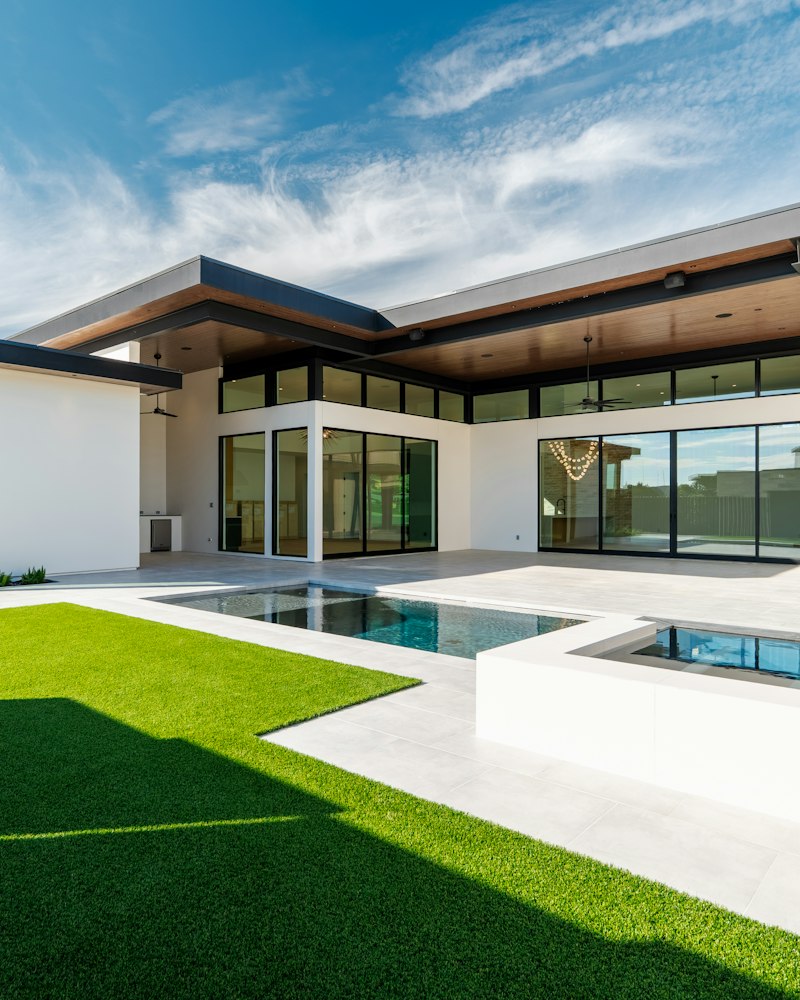
Oversized slabs with tight joints read almost like stone tile. Our favorite for contemporary homes.
Softened edges and blended colors give an Old World feel that suits Mediterranean and farmhouse homes.
Dense, stain-resistant and crisp. Ideal around outdoor kitchens where spills happen.
A paver patio is only as good as what is underneath. We excavate, install a base compacted in layers, set edge restraints and plan the slope so water runs away from the house.
JAC RecommendsAround mature trees, choose pavers over concrete. Roots shift the ground over time. With pavers, we lift and reset the affected section with no patchwork scar.
Built on a proper base, a paver patio is one of the most durable surfaces you can choose, and individual units can be replaced if one is ever damaged.
Polymeric joint sand hardens between joints and greatly reduces weeds and ants.
Yes, with a base designed for vehicle loads.

The Dreamscape Quiz
Family yard, host, retreat or easy care? Answer five quick questions and see the features and real East Bay projects built for the way you live.
Take the 1-minute quiz