It's one of the first questions East Bay homeowners ask us: should the lawn be real grass or artificial turf? Both can look great. The right answer depends on how you use your yard, how much time you want to spend on it, and what's happening under the surface.
Here's how we walk homeowners through the decision, the honest trade-offs on each side, and the one thing that decides whether either one lasts.
The quick comparison
| Artificial turf | Sod (real grass) | |
|---|---|---|
| Water | None to stay green | Regular irrigation through the dry season |
| Weekly upkeep | An occasional rinse and brushing | Mowing, edging and feeding |
| Looks | Green every day of the year | Natural, changes with the seasons and care |
| Feel underfoot | Soft and consistent | Cool and natural |
| Full afternoon sun | Gets warm; plan for shade | Loves sun, needs water to keep up |
| Ready to use | Right after install | After it roots in, usually a few weeks |
| What makes it last | Excavation, compacted base and drainage | Soil prep, grading and irrigation |
Start with how you actually use the lawn
Before materials, we always ask the same question: what happens on this lawn on a normal Saturday?
- Mostly for looks. If the lawn is something you see from the kitchen or the street more than you walk on it, turf gives you a clean, green yard every day with no mowing. It's why so many front yards go turf.
- Kids playing every day. Both work. Turf stays clean and soft with no mud tracked inside. A real lawn stays cooler and recovers well if it gets good sun and steady water.
- Dogs. Turf works well with dogs when it's built for them: a pet-specific turf and a base designed to drain, so cleanup is a quick rinse. Real grass can struggle with heavy traffic and bare spots in high-use areas.
- You love the real thing. If you want the feel and smell of real grass and you have a sunny spot, a well-built sod lawn is a beautiful choice.
Water and weekend upkeep
Our dry season is long. A real lawn needs regular irrigation from spring into fall, plus mowing, edging and feeding to look its best. Turf needs no water to stay green and very little routine care: an occasional rinse and brushing to keep the blades standing up.
JAC RecommendsIf water use and weekend upkeep are the main reasons you're considering a change, turf is usually the better fit. If you love the feel of real grass and have good sun, a sod lawn sized to the area you actually use, surrounded by planting on drip, gives you the best of both.
Heat, sun and comfort
Turf gets warm in direct afternoon sun, especially in hotter inland areas. In full-sun yards we plan for it: shade from trees or a structure nearby, a lighter turf color, and lighter infill. A quick rinse also cools it down on hot days.
Real grass stays cooler underfoot, but it needs that same sun and steady water to stay thick and green. In shady yards, real grass often thins out, and turf becomes the easier choice.
What's underneath decides how long it lasts
Whichever you choose, the surface is only as good as what's beneath it. This is where most lawns that look great on day one start to fail by year three.
- Turf: we excavate, install a compacted base and plan drainage so water moves through instead of pooling. A proper edge, often a paver border, locks the turf in place so the lines stay crisp.
- Sod: we prepare and amend the soil, grade it so water runs away from your house, and set irrigation that reaches every edge before the first roll goes down.
A lot of the East Bay sits on clay soil that holds water and punishes shortcuts on both. A turf lawn on a thin base develops dips and puddles. A sod lawn on unprepared clay stays soggy in winter and dries out in summer.
Real JAC yards: turf and sod
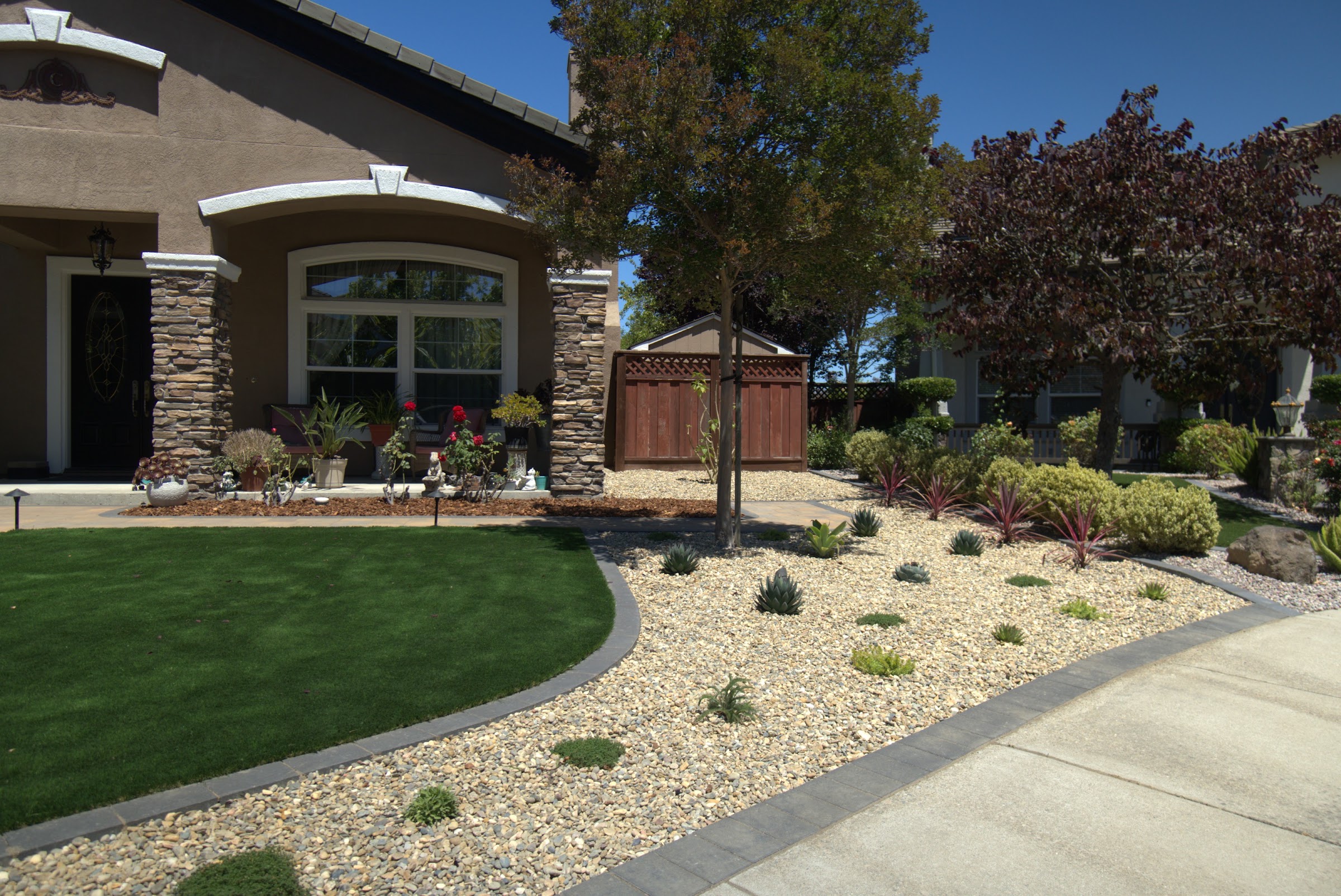
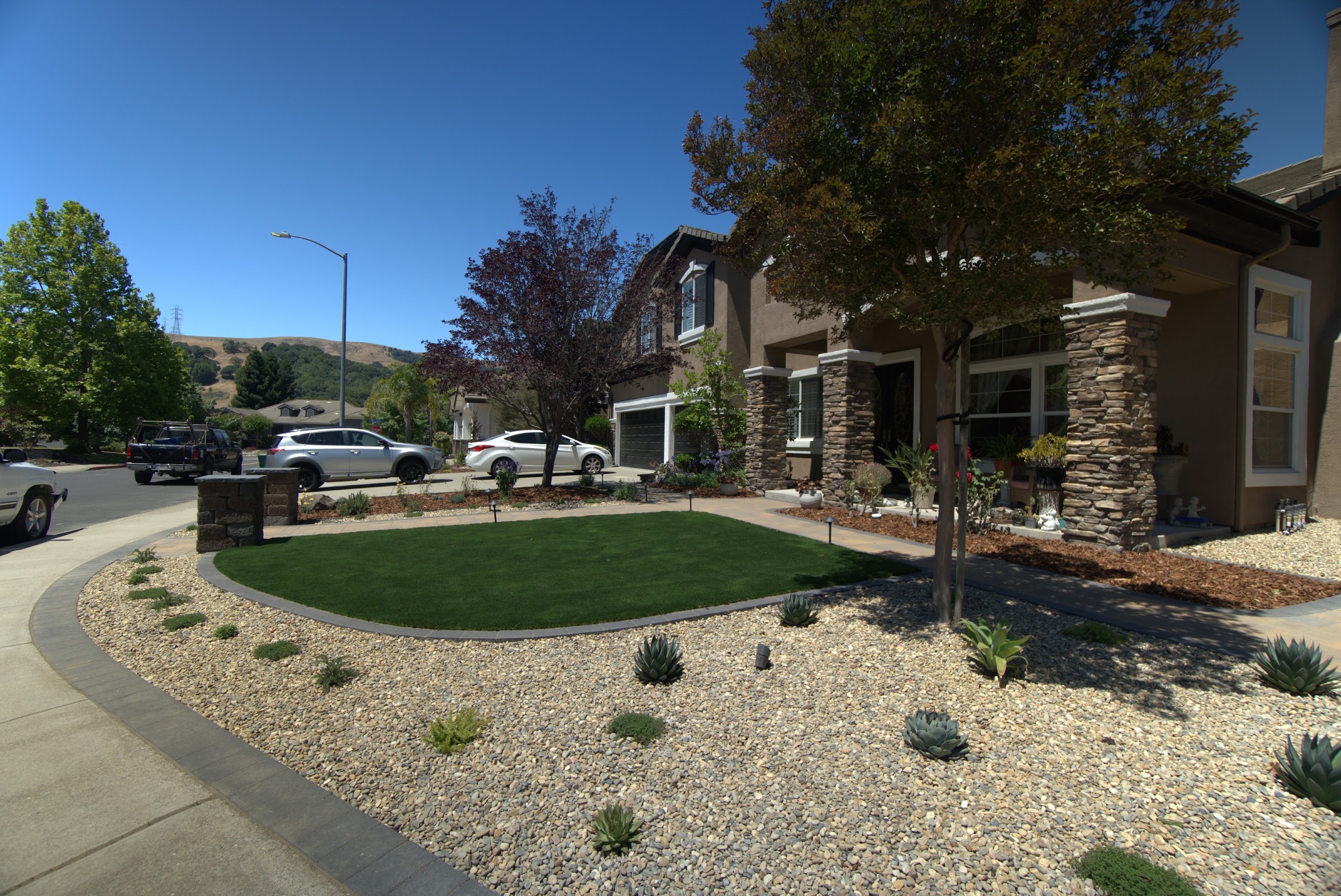
A low-water front yard in San Ramon. We framed a curved turf lawn with river rock, drought-tolerant planting and a charcoal paver border so the lines stay crisp along the sidewalk and driveway. See the San Ramon front yard.
A four-day front yard in Pittsburg. Dead grass and bare dirt became a paver walkway, turf with a paver border, a tree ring and decorative rock. The homeowner wanted a front yard that looks sharp without weekend upkeep. See the Pittsburg front yard.
A real lawn in Oakland. For a homeowner who wanted the real thing, fresh sod finishes a new curved paver patio and runs right up to the steps, on a yard we regraded so water moves away from the patio. See The Scottie in Oakland.

A play yard on a hillside in Piedmont. On a steep family yard, turf gave a small child a soft, clean place to play that's ready any time, with no mud and no mowing. See the Piedmont family yard.
Mixing them. You don't have to choose one material for the whole yard. In Hayward, we set turf with inset paver stepping pads so the yard reads as one clean, low-maintenance surface. Many yards use turf where the traffic is and planting everywhere else.
Is it time to decide?
If you're weighing turf against sod, the best next step is a walk through your yard: where the sun falls, how water moves, and how your family uses the space. Start with a discovery consultation and we'll give you an honest recommendation for your yard, even if the answer is a little of both.
Frequently asked questions
Does artificial turf look fake?
Good turf on a proper base looks natural from the house and the street. What makes turf look fake is usually the install: visible seams, wavy edges and low spots. A compacted base and a crisp border make the difference.
Is turf safe for kids and dogs?
Turf is a popular choice for both. For dogs we recommend a pet-specific turf and a base designed to drain, so cleanup is a quick rinse. For play areas, a padded base can add cushion under play structures.
Does turf get hot?
It can in full afternoon sun. Shade, a lighter turf color, lighter infill and a quick rinse all help. We plan for it during design.
How long does turf last?
Quality turf on a proper base lasts many years. How long depends on the product, the sun and how heavily it's used.
How soon can we use a new sod lawn?
After it roots in, usually a few weeks. We give you care instructions at installation.
Can I have both turf and real grass?
Yes. Many yards use turf where the kids and dogs play, real grass or planting where you want softness, and pavers to tie it together.
Not sure which fits you?
Take the 1-minute Dreamscape Quiz to find your backyard style, or compare both on our artificial turf and sod and natural lawn pages.
One outdoor living idea a week, straight to your inbox.
New guides, real East Bay projects and planning advice from the JAC Dreamscapes team. Every Thursday morning. Unsubscribe anytime.