Downtown · Vintage Hills · Kottinger Ranch · Birdland · Pleasanton Valley · Ruby Hill
Schedule a Discovery ConsultationFew places in the Bay Area hold on to their downtown the way Pleasanton does. The neon sign still glows over Main Street, the Saturday farmers market still fills Angela Street, and on a warm night every patio along Main is full. People here know how good it feels to eat and talk outside.
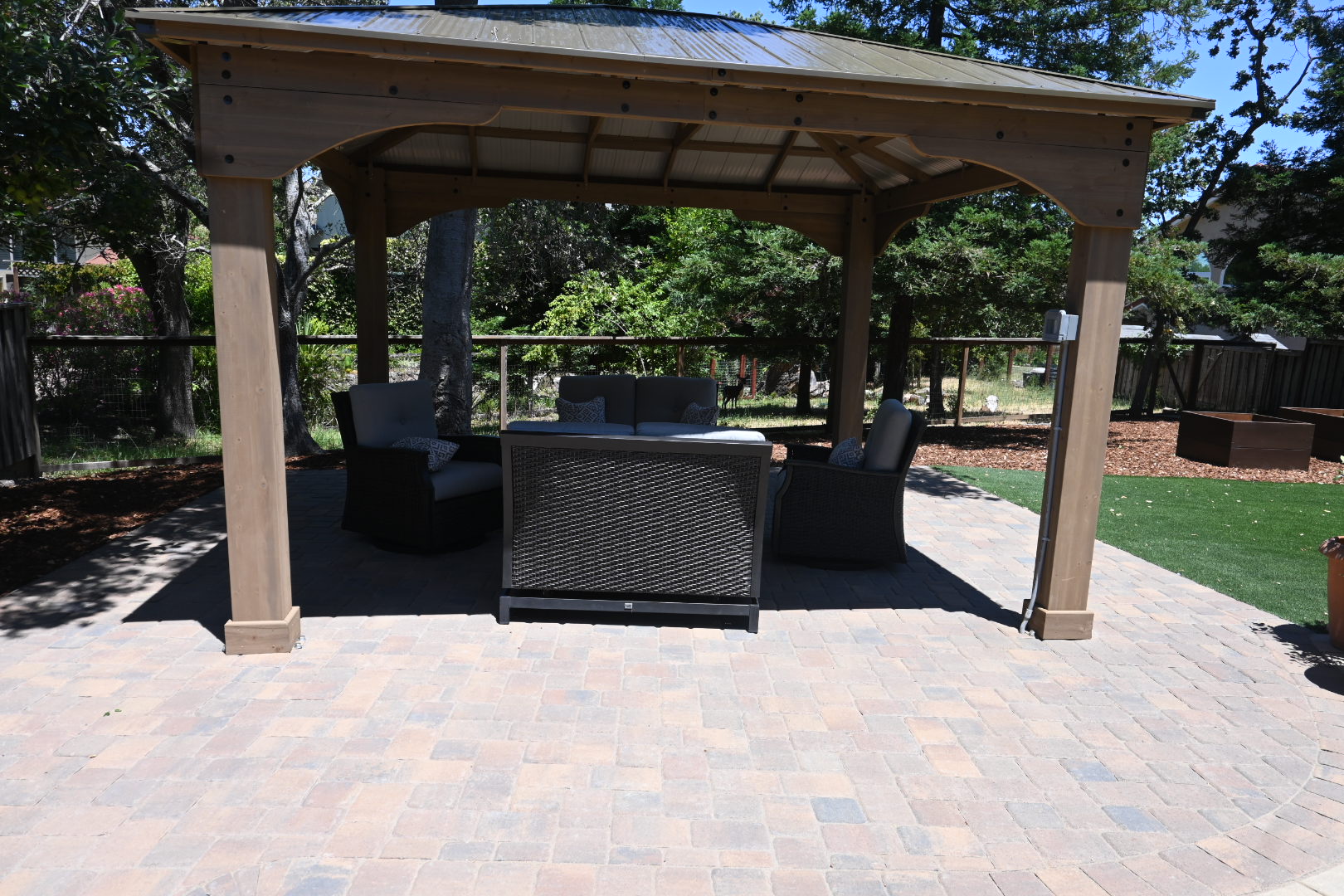
We design and build outdoor living spaces for homeowners in Pleasanton who want that same feeling at home. Our work runs from a single patio and kitchen to a complete front and back yard plan, designed before anything is built.
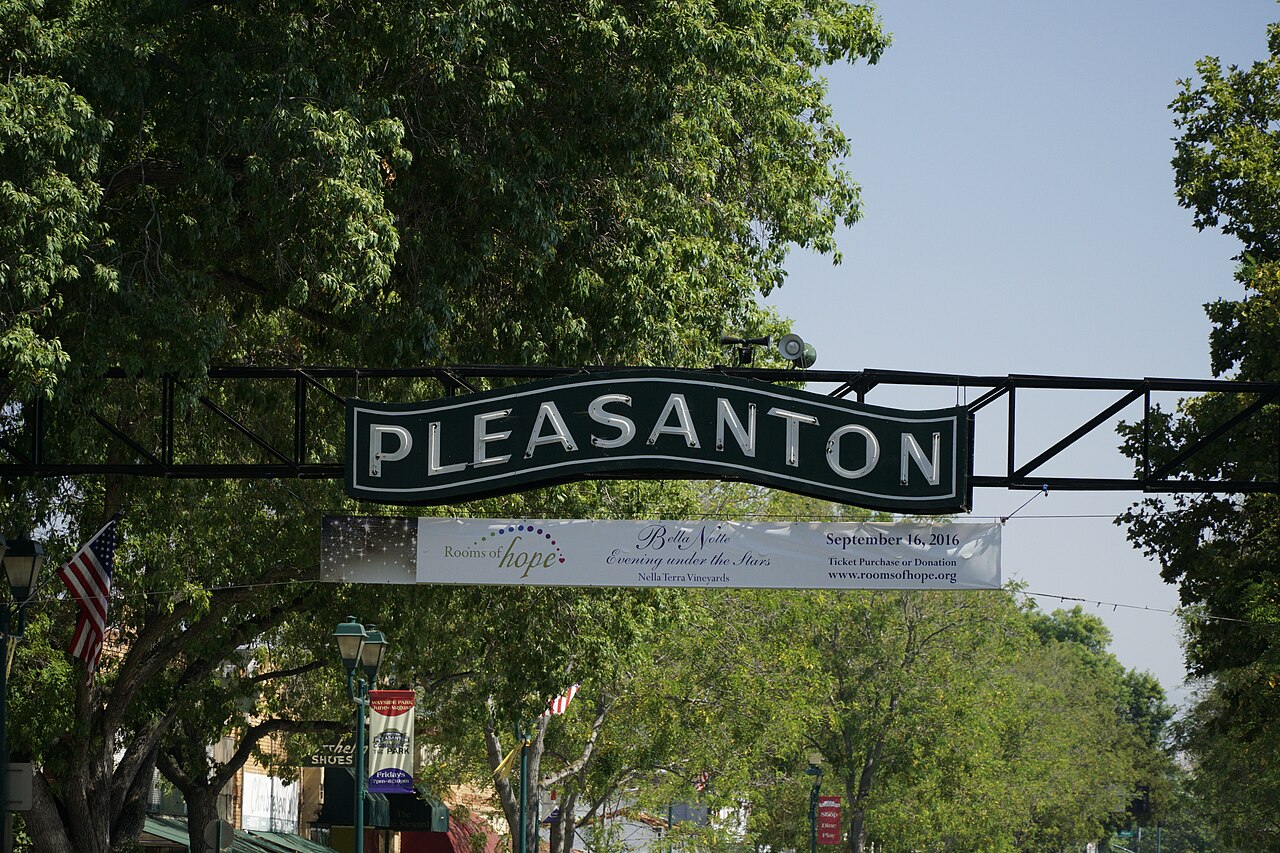
The Pleasanton sign over Main Street. Photo: Californiathegreat, CC BY-SA 4.0
Downtown Pleasanton is walkable in the best way. Historic storefronts line Main Street, and the 1990s redesign gave it room for sidewalk dining. The local history museum sits in the 1915 building that once served as city hall and the police department.
A few blocks away, the 270 acre Alameda County Fairgrounds hosts the county fair, held since 1912, and a racetrack built in 1858 that is often called the oldest one-mile horse racing track in the country. To the west, Pleasanton Ridge Regional Park and Augustin Bernal Park offer long hikes with views back across the valley. And the vineyards of Livermore Valley wine country start just east of town.
It is a city where people use the outdoors every week. A well-designed backyard fits right into that.
Before there was a Pleasanton, there was Alisal, a settlement centered on the Francisco Solano Alviso Adobe, built in 1844. The adobe still stands in Alviso Adobe Community Park. During the Gold Rush years, Alisal had a rough reputation as a hideout for bandits.
In the 1860s, John W. Kottinger, a justice of the peace who had married into the Bernal family, chose a new name honoring Union General Alfred Pleasonton. A clerk's spelling error gave the town the name it carries today. Kottinger's 1852 adobe barn on Ray Street is still standing.
Pleasanton incorporated on June 18, 1894. In 1932, in the middle of the Depression, the Women's Improvement Club raised money for the neon sign over Main Street, with the city paying for the poles. After World War II the town shifted from ranching and farming to homes and business parks, but the old center stayed.
Pleasanton yards range from compact lots near downtown to hillside homes and large estate properties. These are the projects that fit best.
Not sure which mix fits your home? Our backyard style quiz is a good first step.
Answer five quick questions and see the features and projects built for the way you live.
Heat and rainfall. Pleasanton has a Mediterranean climate with hot, dry summers and mild winters, and it averages about 14.5 inches of rain a year. The city's record high is 115 degrees. We plan shade, materials and plant choices for that heat.
Soil. Tri-Valley soils vary a lot from one site to the next. Some local gravelly loams and claypan soils have moderate to high shrink-swell potential. We plan the base, compaction and drainage to match the conditions on your lot.
Water. Zone 7 Water Agency supplies treated water to the Tri-Valley, and the City of Pleasanton is one of the retailers that delivers it to homes. Any rebate or water-use rule depends on your provider, so we confirm it early.
Fire hazard zones. The state updated its local fire hazard maps for Alameda County in 2025. Homes near Pleasanton Ridge and other hillside open space may fall in mapped zones, which can add requirements. We check your parcel and confirm with the city during planning.
Permits and HOAs. Permits are issued by the City of Pleasanton. Ruby Hill and other planned communities have their own design review. We prepare the drawings and plan the schedule around it.
Every project begins with a discovery consultation. We learn about your home, your goals and how you want to live outside, then recommend the right next step.
Schedule a Discovery ConsultationYes, we design and build outdoor living spaces throughout Pleasanton, including gated communities. We prepare plans for HOA review and coordinate access and work hours with community rules.
It depends on the scope. Patio covers, outdoor kitchens with gas or electrical, and taller retaining walls typically need permits from the City of Pleasanton. We identify them during design and handle the submittals.
Combine shade and materials. A patio cover or cantilever pergola, lighter-toned pavers, and trees placed on the west side make a big difference.
Yes. Many homeowners pair a smaller lawn or artificial turf with low-water planting. Ask your water provider about rebates before work starts, since some programs require approval first.
Slopes add engineering, drainage and possibly fire zone requirements. We plan retaining walls and drainage first, then design the living spaces on top of a sound base.
Yes. For older homes near Main Street, we often use brick, natural stone and traditional details that fit the house instead of fighting it.
Book a Discovery Consultation. We visit your home, listen to how you want to use the space, and walk you through our process from design to reveal.